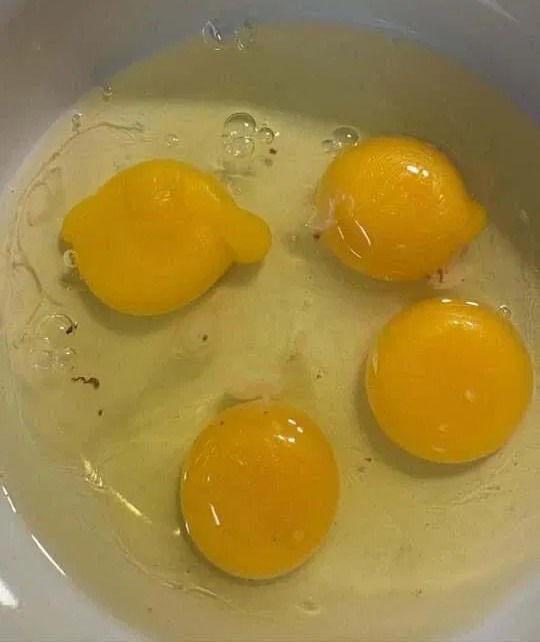
Are Eggs With Blood Spots Safe to Eat?
Yes! Eggs with blood spots are completely safe to eat, as long as they are properly cooked. These spots are harmless and won’t cause any illness. If you prefer, you can remove the spot with the tip of a knife before cooking, but this is purely for aesthetic reasons.
Additionally, some eggs may contain brown meat spots in the egg white. These are tiny pieces of tissue that the egg picks up as it moves through the oviduct. Like blood spots, they are harmless. However, if the egg white appears red, pink, or green, the egg should be discarded. This discoloration may indicate bacterial contamination, which could pose a health risk.
How Common Are Blood Spots in Eggs?
Fewer than 1% of eggs contain blood spots, and if you’re buying eggs from a grocery store, you’re unlikely to come across one. This is because commercial egg producers use a process called candling, where bright light is used to detect and remove eggs with imperfections before they reach consumers. While blood spots are not a health concern, they are typically removed because they may be unappealing to some people.
However, if you’re consuming farm-fresh eggs, you may encounter them more often. Since these eggs don’t go through the same grading process, blood spots may be more common. Brown eggs also have a higher likelihood of containing spots because their darker shells make it harder to detect them during candling.
Why Do Some Eggs Have Blood Spots?
A common misconception is that blood spots indicate a fertilized egg—this is false. Instead, blood spots occur when tiny blood vessels in the hen’s ovaries or oviduct rupture during egg formation.
- If the blood spot is in the yolk, the bleeding occurred in the ovary when the egg was released from the follicle.
- If the spot is in the egg white, the bleeding happened later, as the egg moved through the oviduct.
Always Store and Cook Eggs Properly
Regardless of whether an egg has a blood spot, proper storage and cooking are essential for food safety.
- Storage:
- Store-bought eggs should always be kept in the refrigerator.
- Farm-fresh eggs can be stored at room temperature, but they should be kept in a cool, dark place.
- Discard any eggs with cracked shells, as bacteria can easily enter through the cracks.
- Cooking:
- Always wash your hands before and after handling raw eggs.
- Cook eggs until both the yolk and white are firm.
- Avoid consuming raw or undercooked eggs unless they are pasteurized, as raw eggs can carry Salmonella.
- If transporting eggs, keep them in a cooler or next to an ice pack to maintain a safe temperature.
ADVERTISEMENT ADVERTISEMENT