5. The Smell Test: Sour, Yeasty, or Off Odors Explained
Smell is one of the most reliable indicators of spoilage. Fresh canned tomatoes should smell clean and mildly acidic. Sour, yeasty, or unpleasant odors often signal fermentation or bacterial activity.
A sour smell may indicate lactic acid bacteria, while a yeasty odor suggests yeast fermentation. Either case means the product is unsafe to consume.
6. Texture and Color Changes That Point to Spoilage
Spoilage can also be detected through changes in texture and color. Tomatoes that appear mushy, slimy, or unusually soft may be spoiled. The liquid may become cloudy or develop an abnormal color.
These changes are often caused by enzymatic breakdown or microbial growth, both of which compromise food safety.
7. Botulism, Canned Tomatoes, and When to Be Seriously Concerned
Botulism is a rare but serious risk associated with canned foods. It is caused by Clostridium botulinum, a bacterium that thrives in low-oxygen environments and produces a dangerous toxin.
Warning signs include bulging cans, off odors, and abnormal textures or colors. If botulism is suspected, do not taste the product. Dispose of it safely and follow local health authority guidelines.
8. How Storage Conditions Can Trigger Fermentation or Spoilage
Improper storage can increase the risk of spoilage. Canned goods should be stored in a cool, dry place, away from direct sunlight and temperature extremes.
High temperatures can weaken seals and accelerate spoilage, allowing microorganisms to enter. Always avoid cans that are dented, bulging, rusted, or leaking.
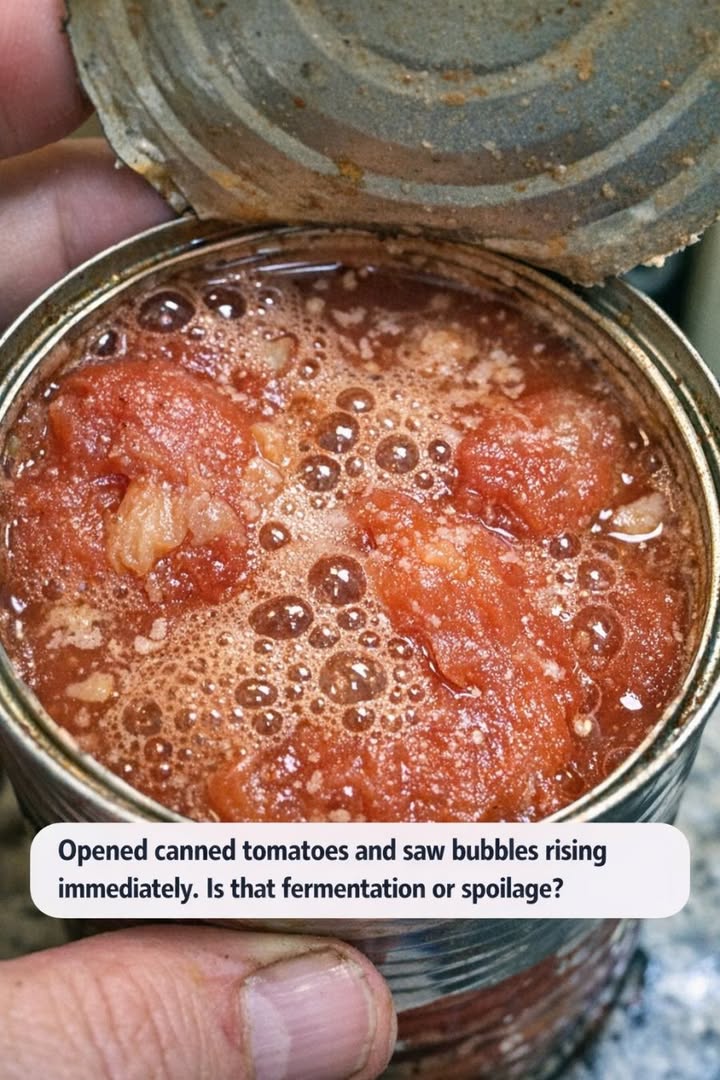
9. What to Do Immediately If You See Suspicious Bubbles
If you notice suspicious bubbling, evaluate the product using visual cues, smell, and texture. When in doubt, discard it.
Never consume canned tomatoes that show signs of spoilage or come from a compromised can. Caution is the best defense against foodborne illness.
10. Smart Shopping and Storage Habits to Prevent Future Problems
Buy canned tomatoes from reputable brands and retailers. Check expiration dates and inspect cans for damage before purchasing.
At home, store cans properly and rotate your pantry stock, using older items first. Good storage habits help maintain quality and safety.
11. When in Doubt: Simple Rules for Keeping Your Kitchen Safe
When in doubt, follow basic food safety rules: inspect carefully, smell before use, and never taste food that seems questionable. Trust your instincts.
Staying informed about food safety practices and product recalls helps keep your kitchen—and everyone in it—safe.