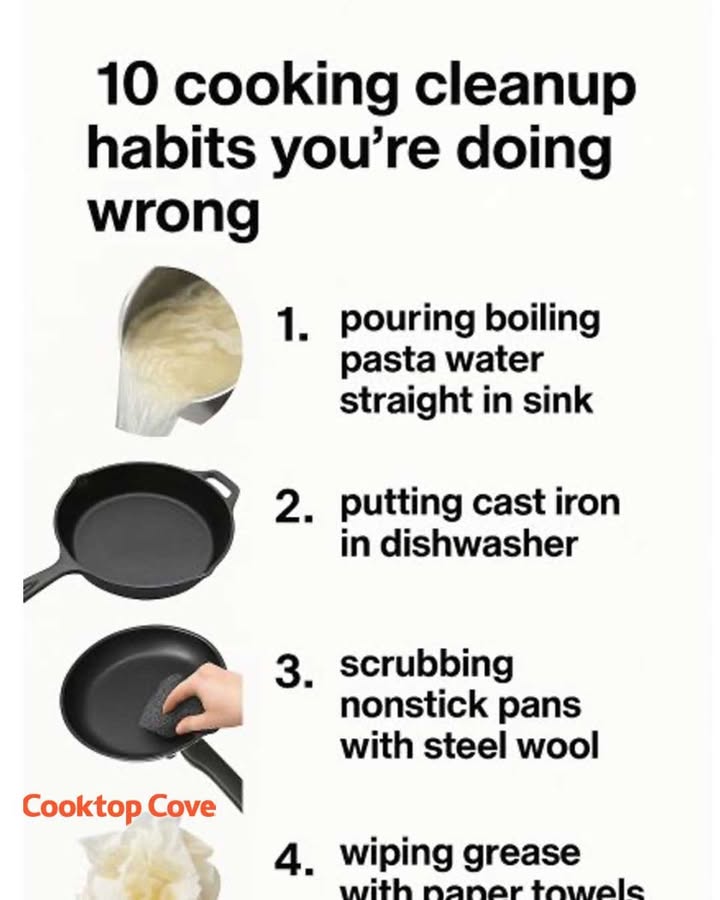
1. Pouring Boiling Pasta Water Straight Into the Sink
When you pour boiling pasta water directly into the sink, you risk damaging your plumbing. The heat can weaken or warp PVC pipes over time, leading to leaks or costly repairs. Instead, consider using a pasta pot with a built-in strainer or a separate colander placed in the sink. Let the water cool slightly before pouring it out to minimize the risk.
Additionally, pasta water is rich in starch and can be reused to thicken sauces or soups, or even to water plants. By capturing and cooling it rather than pouring it directly away, you can enhance your dishes or contribute to a sustainable practice.
2. Putting Cast Iron Cookware in the Dishwasher
Cast iron cookware is incredibly durable, but it requires specific care to maintain its seasoning and prevent rust. Putting cast iron in the dishwasher exposes it to excessive moisture and harsh detergents, which can strip away the seasoning and lead to rust. Instead, clean your cast iron with a scrub brush or sponge using hot water. If necessary, use a small amount of mild dish soap and dry it thoroughly before applying a thin layer of oil to preserve the seasoning.
3. Scrubbing Nonstick Pans with Steel Wool
Nonstick pans are designed to make cooking and cleaning easier, but using steel wool or abrasive scrubbers can ruin their surface. The coating is delicate and can easily be scratched, compromising its nonstick properties and potentially releasing harmful chemicals if overheated. Use a soft sponge or a brush with nylon bristles to clean nonstick pans. If food residue is stuck, let it soak in warm, soapy water for a few minutes before gently scrubbing.
4. Wiping Grease with Paper Towels and Tossing
Cleaning up grease with paper towels might seem convenient, but it can lead to waste and plumbing issues. The grease-soaked towels add to landfill waste, and if you pour excess grease down the drain, it can solidify and cause blockages. Instead, pour grease into a heat-resistant container and let it solidify before disposing of it in the trash. Alternatively, you can reuse grease for cooking, storing it in a jar.
ADVERTISEMENT
ADVERTISEMENT